Know your bike. Build your skills. Ride responsibly.
E-Bike Safety in Norwalk, CT
E-bikes make it easier to travel farther, climb hills and enjoy more trips by bike. Their added power and speed also make rider training, a properly fitted helmet, predictable riding and safe battery care especially important. Use these trusted resources from Watch for Me CT, the League of American Bicyclists and the Norwalk Police Department to choose the right bike, understand Connecticut law and help every rider start safely.
E-Bike Safety: What Connecticut Riders & Parents Need to Know
This short video from the Connecticut Police Chiefs Association explains e-bike classifications, common safety concerns and essential steps to take before riding. The association’s guidance emphasizes wearing a properly fitted helmet, following traffic laws and signals, staying visible and alert, and knowing the class of the bike.
Learn how to identify a legal e-bike and take practical steps to ride safely and responsibly in Connecticut.
Start with Five Essentials
Wear a helmet every ride.
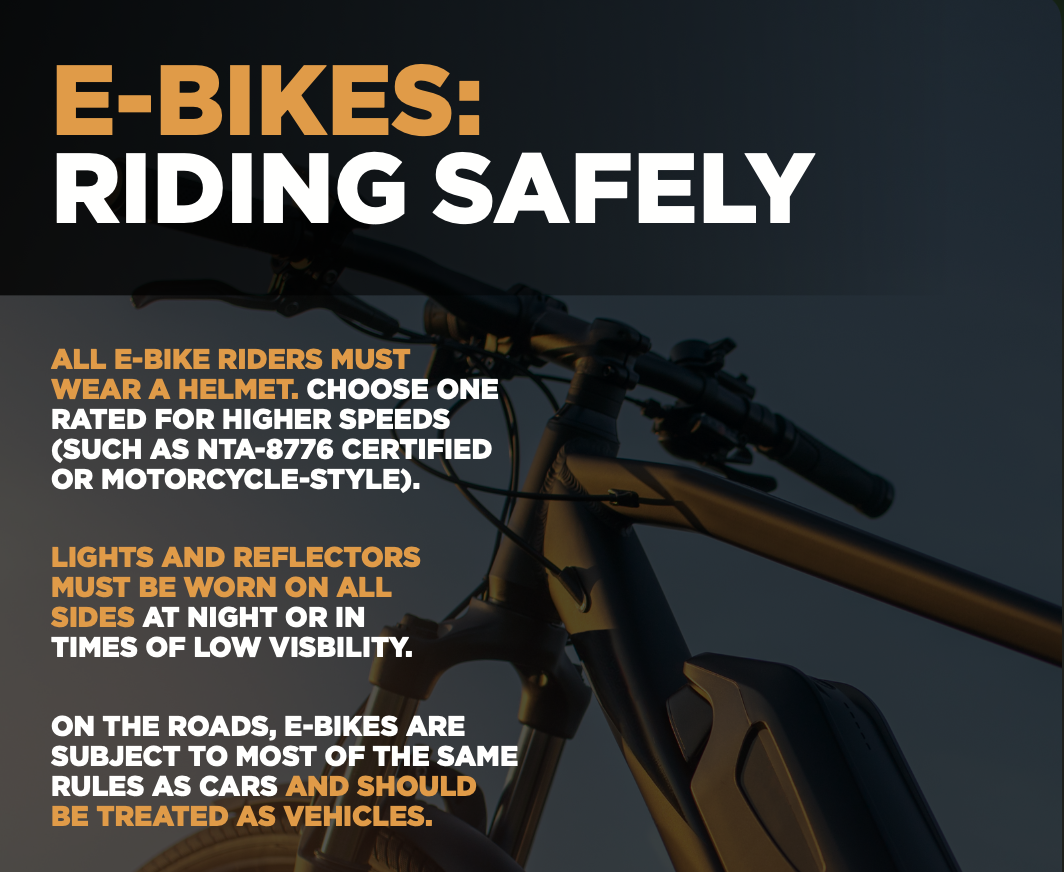
Connecticut requires every e-bike operator and passenger to wear approved protective headgear, regardless of age or e-bike class.
Know what you are riding.
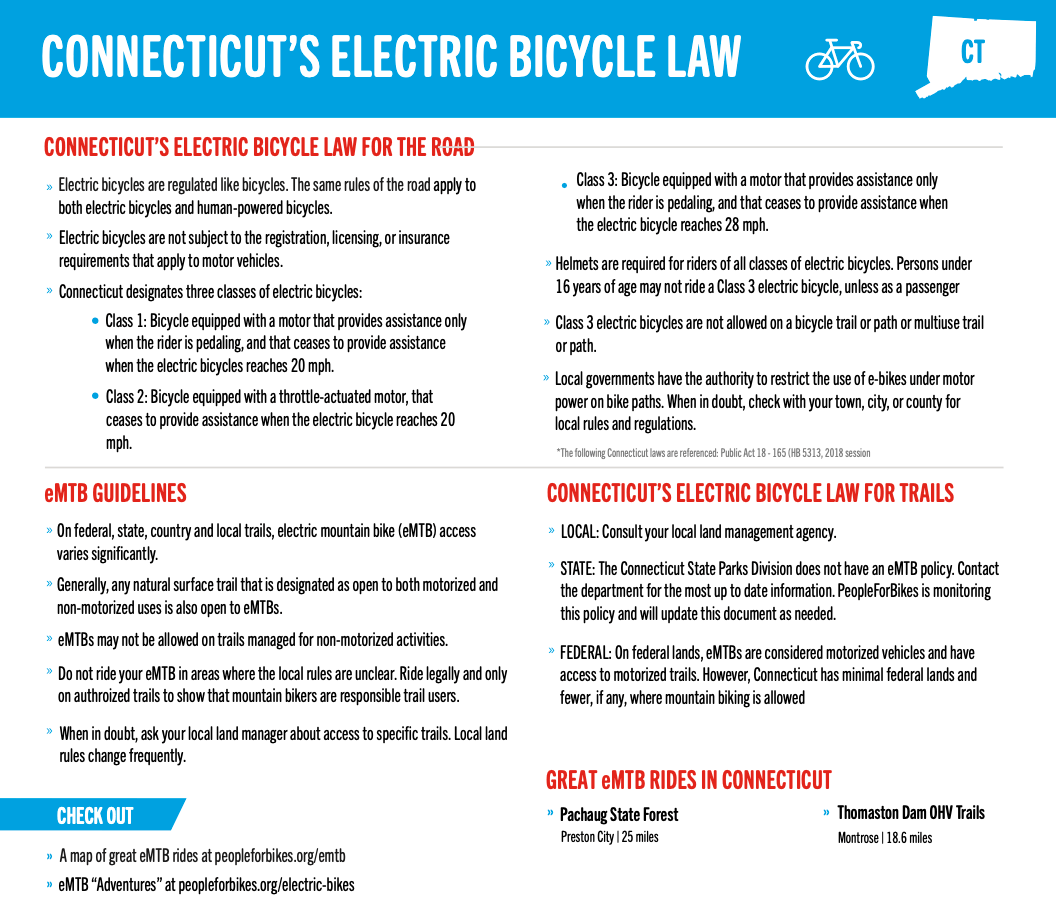
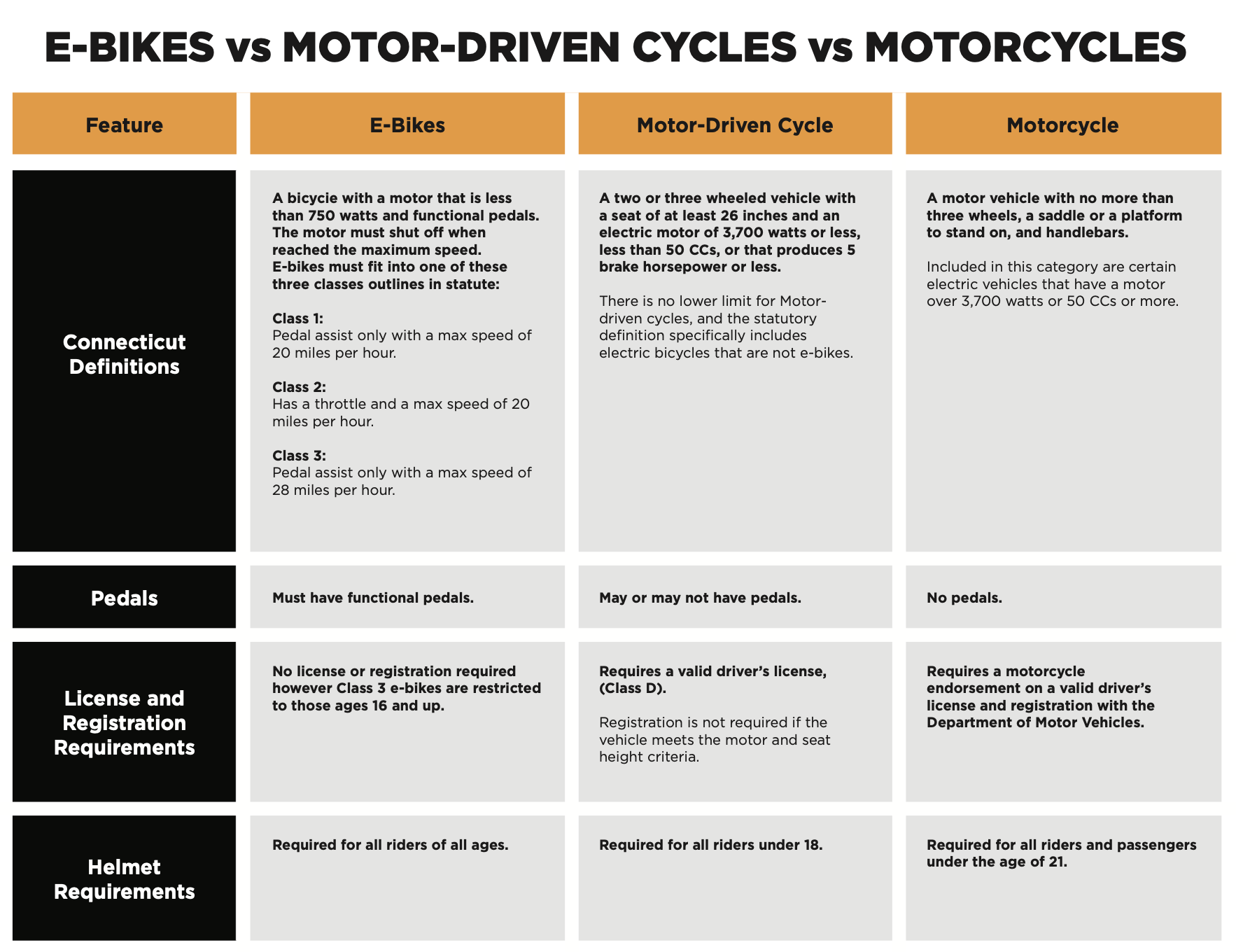
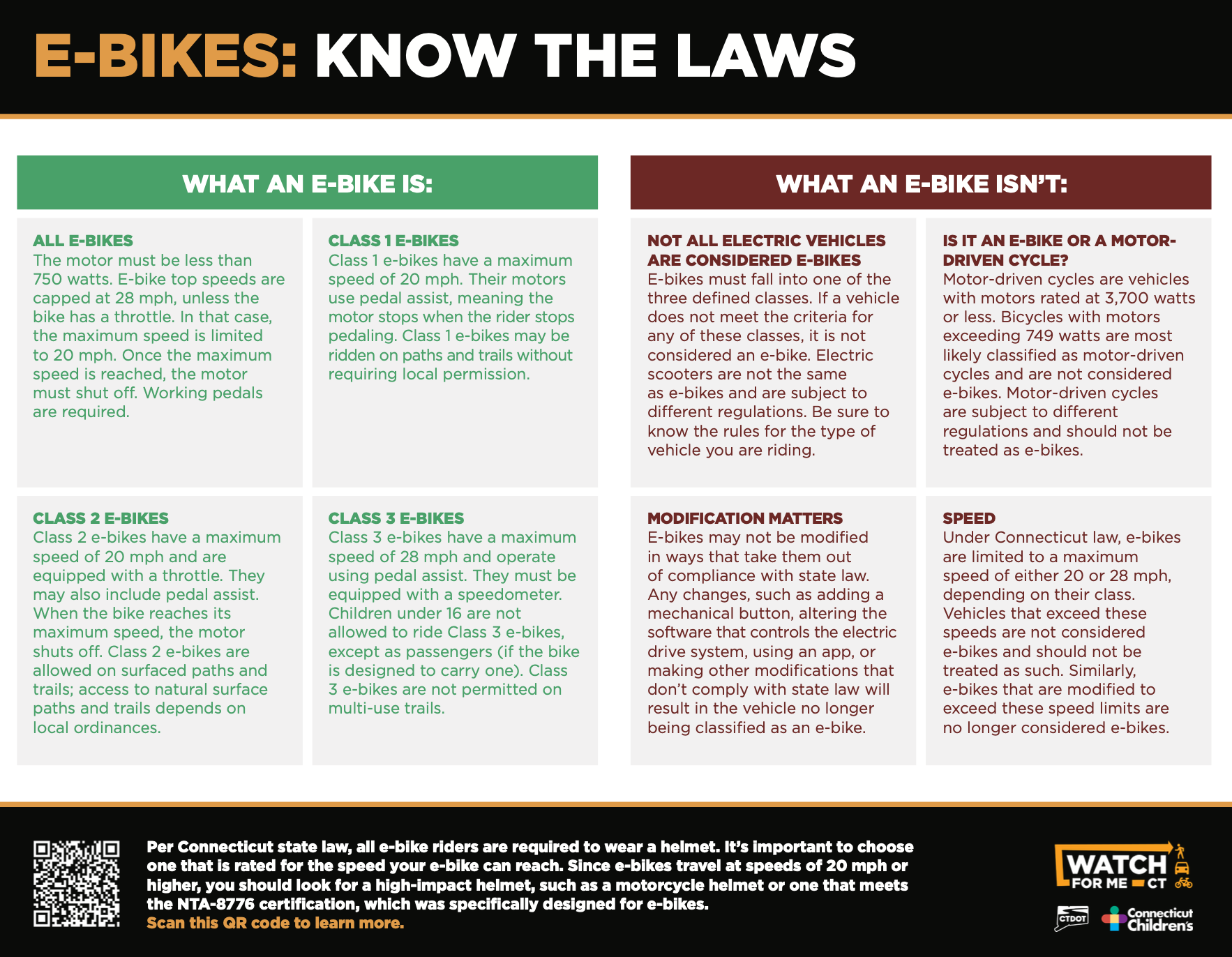
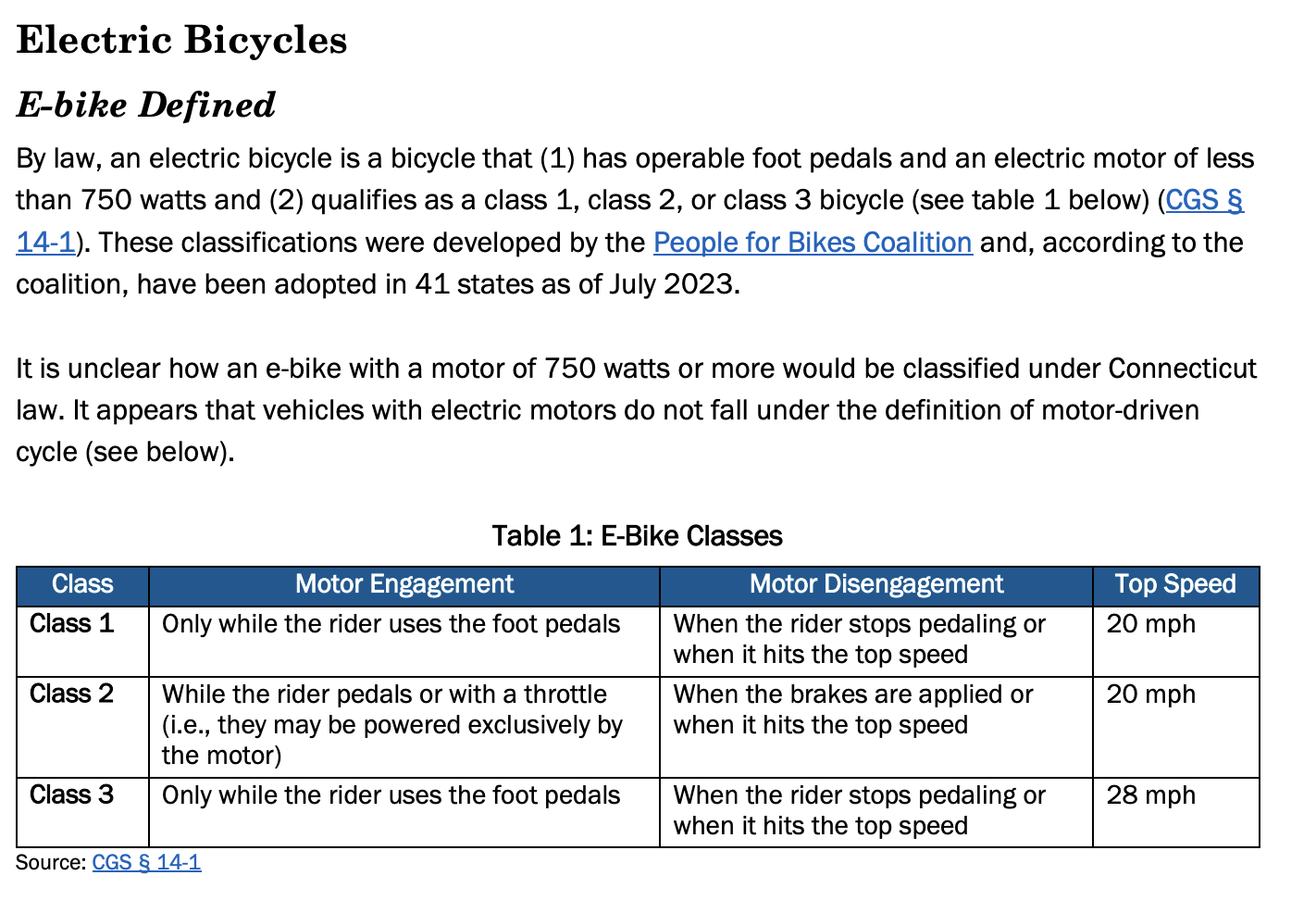
A legal Connecticut e-bike has operable pedals, a motor under 750 watts and operating characteristics that meet the Class 1, 2 or 3 definition.
Ride predictably.
Obey signs and signals, travel in the same direction as traffic, signal before turning and use the correct lane position.
Slow down and stay alert.
Added speed changes stopping distance and leaves less time to react to turning vehicles, driveways, pedestrians and surface hazards.
Check the bike before every ride.
Inspect air, brakes, chain and other components, then take a short, slow test ride before entering traffic.

Know your e-bike
Not every two-wheeled electric vehicle sold as an “e-bike” qualifies as one under Connecticut law. Check the manufacturer’s class label, motor wattage, maximum assisted speed and whether it has working pedals before buying or allowing a young person to ride.
Important: A pedal-less or out-of-class electric vehicle at or above the applicable power threshold may be a motor-driven cycle or motorcycle (not an e-bike) and can require a driver’s license, registration, insurance or a motorcycle endorsement. Modifying speed software, controls or hardware can also change the vehicle’s legal classification.
Guidance for parents: Is your child ready?
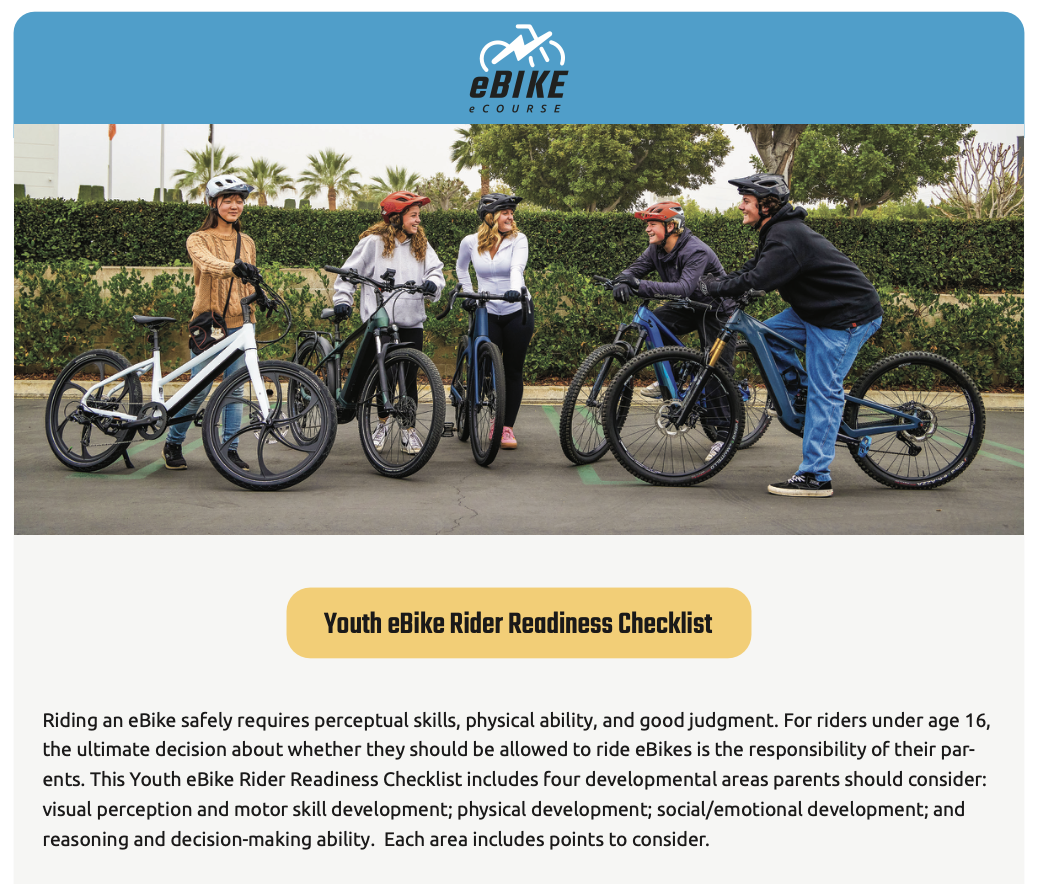
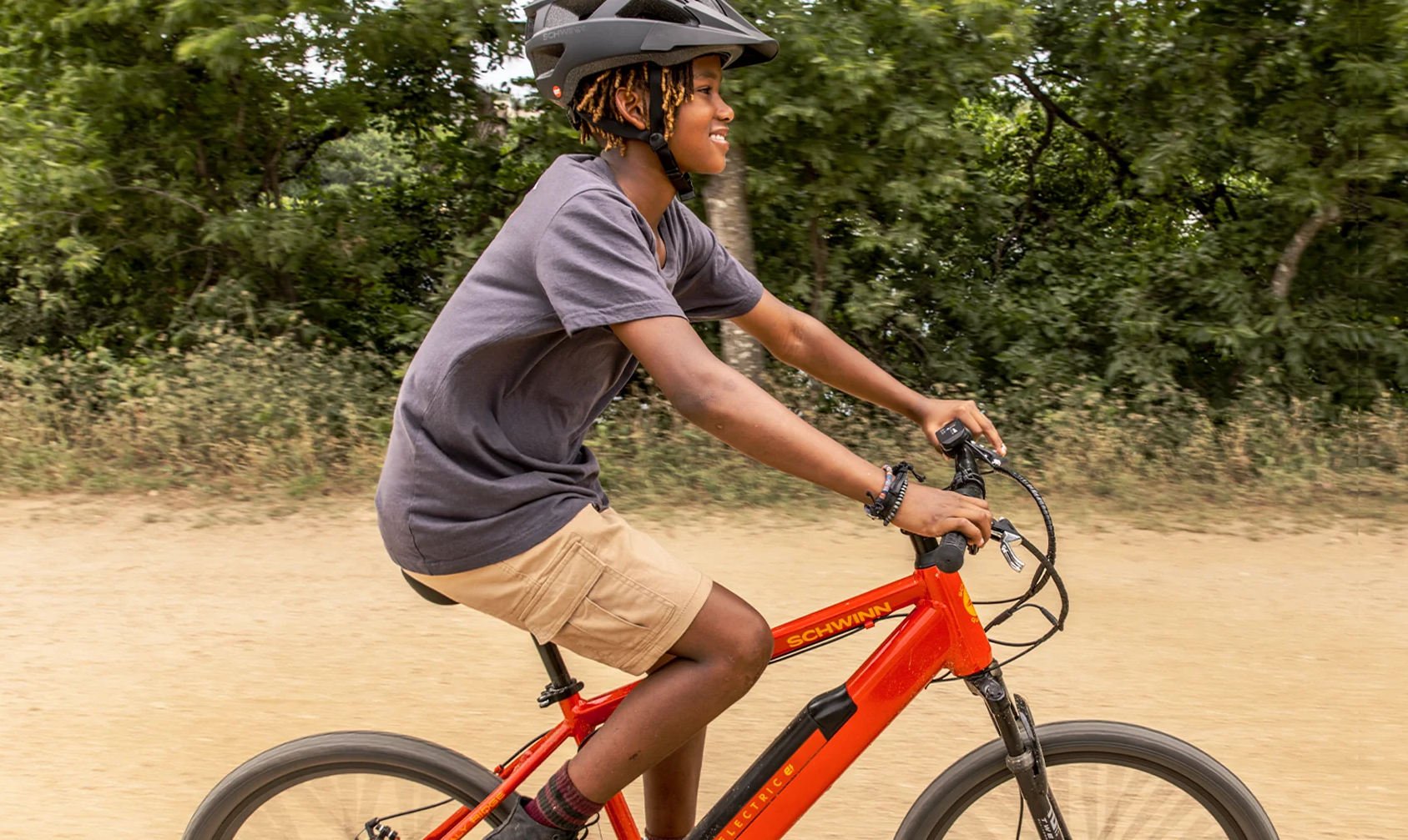
Legal permission is only the first question. A young rider should also be able to see and judge traffic movement, control the bike’s weight and brakes, understand stopping distance, follow rules consistently, recognize hazards and make calm decisions without close supervision. Before handing over the keys or controls:
1. Verify the vehicle. Find the class, wattage and maximum assisted speed on the manufacturer’s label. Do not rely only on a retailer’s product name.
2. Confirm age eligibility. A child under 16 cannot operate a Class 3 e-bike in Connecticut.
3. Check fit and control. The rider should be able to straddle the frame, reach the grips and brake levers, turn the handlebars, support the bike and squeeze the brakes firmly.
4. Review judgment. Make sure the rider understands that other road users may not see them and that speed affects the time and distance needed to stop or turn.
5. Set family rules. Agree on approved routes, riding hours, passenger rules, phone use, charging responsibilities and consequences before the first independent ride.
6. Practice together. Begin in a low-traffic area with the lowest assist setting. Practice starting, smooth braking, scanning, signaling, turning, emergency stopping and approaching driveways and intersections.
Guidance for youth: Ride smart every time
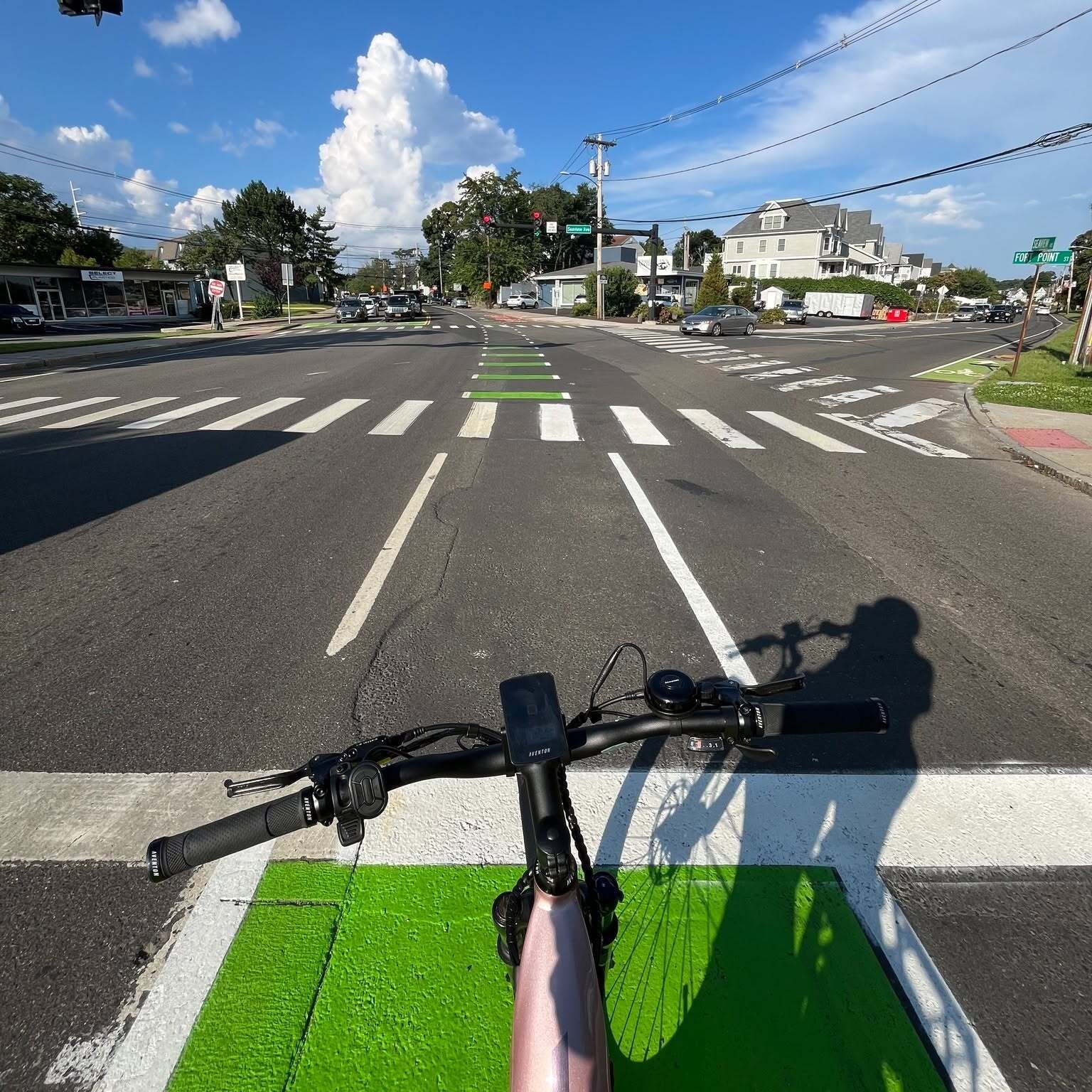
Take the challenge: The League of American Bicyclists’ free E-Bike Smart course uses short videos and quizzes to teach bike classes, battery care, pre-ride checks, traffic skills, collision awareness and trail etiquette. Riders who score at least 75% can earn a certificate of completion.
Wear a Helmet: A helmet works best only when worn correctly. Position it level with about two finger-widths between the eyebrows and helmet; form a “Y” with the side straps below each ear; and tighten the chin strap so less than half an inch of space remains.
Battery Safety: Lithium-ion batteries are generally reliable when a certified system is used and the manufacturer’s instructions are followed. Damage, incompatible chargers, extreme temperatures and improper charging can create a fire risk.
Charge & store safely: Choose an eBike whose electrical system is certified by a nationally recognized testing laboratory to an applicable standard such as UL 2849.
Stay present while charging; never charge while sleeping or when no one is home. Unplug the battery when it is fully charged. Plug directly into a wall outlet, not an extension cord or power strip. Charge on a hard, stable surface away from combustible materials and exits.
Never place a lithium-ion battery in household trash or curbside recycling; use an approved battery-recycling or hazardous-waste program.
Frequently Asked Questions
What counts as an e-bike in Connecticut?
A Connecticut e-bike must have operable pedals, an electric motor under 750 watts and operating characteristics that fit Class 1, 2 or 3. A vehicle that does not meet those requirements may be regulated as a motor-driven cycle or motorcycle.
Does every e-bike rider need a helmet?
Yes. Connecticut requires every e-bike operator and passenger to wear protective headgear that meets the law’s requirements, regardless of age or class.
Can a child ride an e-bike?
Connecticut prohibits anyone under 16 from operating a Class 3 e-bike. For Class 1 or 2, parents should still evaluate bike fit, control, hazard awareness, judgment and maturity before allowing independent riding
Can an e-bike be ridden on a sidewalk?
Connecticut generally gives a person operating an e-bike on a sidewalk or in a crosswalk the same duty to yield to pedestrians and provide an audible warning before passing, but municipalities may prohibit riding in specific places. Check current Norwalk signs and ordinances, and use streets or bicycle facilities when they provide the safer, more predictable option.
Which e-bikes are allowed on trails?
Class 1 e-bikes are broadly permitted on Connecticut bicycle and multi-use trails unless restricted by local ordinance. Class 2 access depends on the surface and local rules, while Class 3 e-bikes are prohibited on bicycle and multi-use trails.
Can an e-bike carry a passenger?
A rider should carry a passenger only when the e-bike is specifically designed and equipped for one. Passenger helmets are required, and an under-16 passenger on a Class 3 bike is allowed only when the bike is designed to carry a passenger.
How should an e-bike battery be charged?
Use the manufacturer-supplied or approved charger, stay present, charge on a hard surface away from combustibles and exits, and unplug when charging is complete. Never charge a damaged, swollen, overheated or altered battery.
Where can riders learn safe e-bike skills?
The free E-Bike Smart program covers ownership, battery care, bike checks, traffic riding and collision awareness. The League also offers Smart Cycling courses and a tool for finding certified instructors.
Ready to ride smarter?
Learn the law, choose the right bike, practice the skills and make safety part of every trip.